
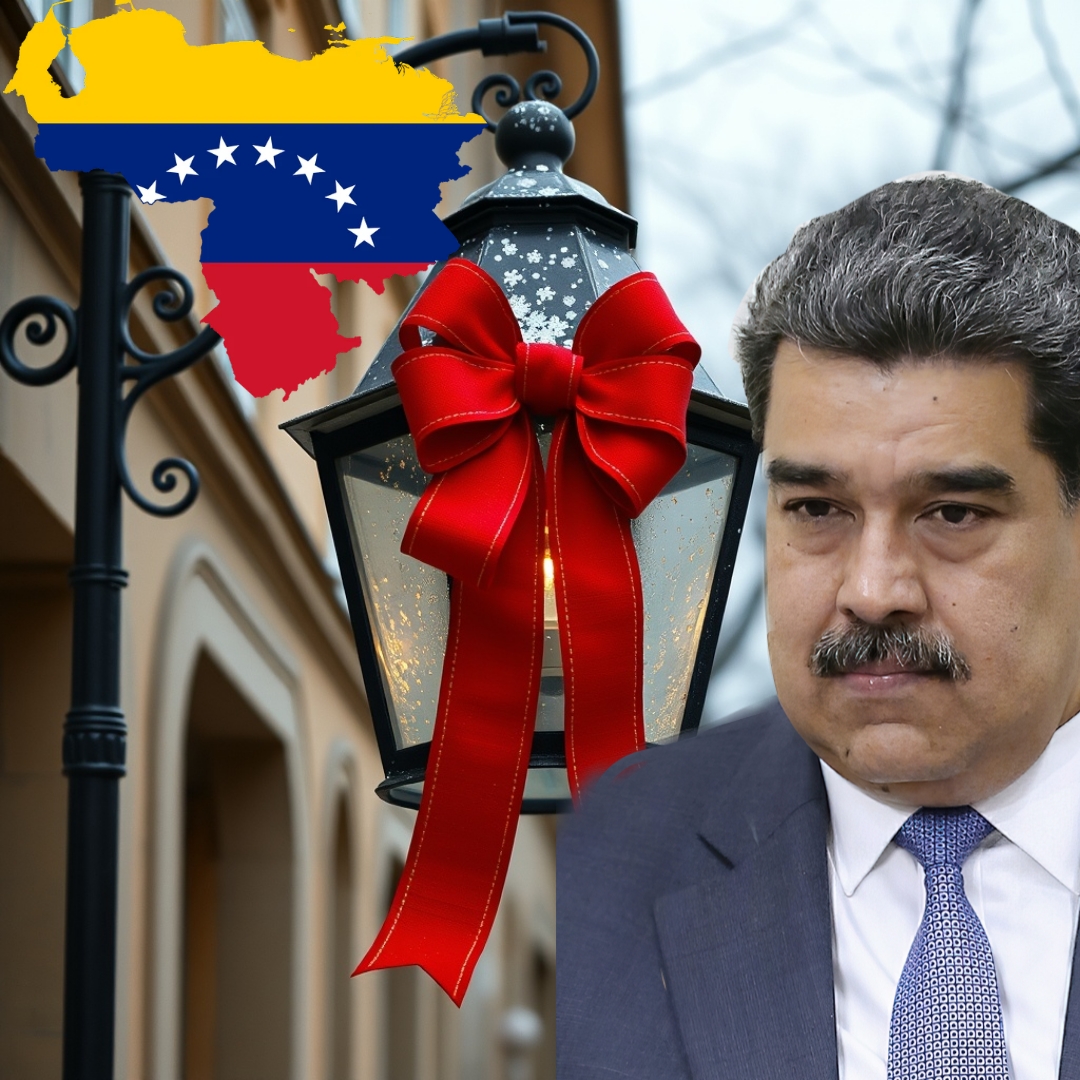
Nicolás Maduro’s tenure as president of Venezuela has become synonymous with authoritarian rule, economic collapse, institutional decay, and widespread human rights abuses.
Since succeeding Hugo Chávez in 2013, Maduro has presided over one of the most dramatic political and humanitarian crises in the Western Hemisphere. The repercussions of his regime extend far beyond Venezuela’s borders, creating legal and political instability throughout South America.
From the erosion of democratic institutions to bizarre acts of executive overreach—such as attempting to move Christmas in 2024—Maduro’s leadership has not only undermined the rule of law at home, but also challenged regional norms and strained international legal frameworks. This article explores the legal dimensions of the Maduro regime’s impact on South America, with a focus on political repression, regional migration, human rights accountability, and the increasingly surreal character of authoritarian governance.
Authoritarian Rule and Legal Breakdown
The Maduro regime has systematically dismantled the foundations of democracy in Venezuela. Following a 2018 presidential election marred by fraud and international condemnation, Maduro retained power through control of key institutions—particularly the military, judiciary, and electoral council. The judiciary, once an independent branch of government, has been packed with loyalists, enabling the executive branch to rule with virtually unchecked power.
Opposition leaders have been arrested, exiled, or barred from holding office. Civil society groups, NGOs, and independent media have been relentlessly harassed, censored, or shuttered. According to Human Rights Watch and the UN Fact-Finding Mission on Venezuela, the regime has committed widespread human rights violations, including arbitrary arrests, torture, and extrajudicial killings.
Legal analysts note that Venezuela now functions under de facto authoritarian rule, with laws manipulated or ignored to consolidate power. Domestic legal remedies for abuse are virtually nonexistent, pushing victims and advocates to pursue justice through international mechanisms like the Inter-American Commission on Human Rights and the International Criminal Court (ICC).
Maduro’s Attempt to Move Christmas to October
In a moment that underscored both the surreal nature of authoritarian power and the dangers of unchecked executive authority, Nicolás Maduro in 2024 declared Christmas would be celebrated in October. The announcement, framed as a move to “bring joy early to the people,” was widely criticized as a transparent attempt to distract from Venezuela’s spiraling economic crisis and political unrest.
Critics argued the move mocked both constitutional norms and the dignity of public governance. Religious leaders pushed back, emphasizing the cultural and spiritual significance of Christmas as a fixed date. Legal scholars questioned the legitimacy of a president attempting to unilaterally rewrite the nation’s cultural calendar—a symbolic but telling example of Maduro’s willingness to politicize every aspect of public life for the sake of control.
More than just a holiday quirk, the episode illustrated the psychological toll and legal absurdities of authoritarianism. It sent a chilling message to Venezuelans: there is no part of national identity, tradition, or daily life that cannot be rewritten by decree.
Regional Consequences: Mass Migration and Legal Strain
The humanitarian consequences of Maduro’s rule have spilled well beyond Venezuela’s borders. With the country’s economy in free fall and basic services collapsing, more than 7.7 million Venezuelans have fled the country—an exodus that has become Latin America’s largest refugee crisis in modern history.
This has placed enormous pressure on neighboring countries like Colombia, Peru, Brazil, and Ecuador. While some nations, such as Colombia, have adopted generous legal protections—like Temporary Protected Status (TPS) for migrants—others have tightened borders or failed to update legal frameworks to accommodate mass displacement.
The migration crisis has tested regional asylum laws, overwhelmed court systems, and strained diplomatic relations. It has also raised concerns about trafficking, exploitation, and access to justice for migrants living in legal limbo. Legal practitioners across South America are now on the frontlines of advising governments, drafting policy, and representing asylum seekers caught in a volatile political landscape.
International Legal Accountability
International bodies have responded with growing urgency. The ICC opened a formal investigation into alleged crimes against humanity committed by Maduro and senior officials, including torture, persecution, and imprisonment of political opponents. This marks a historic moment: Venezuela is the first Latin American nation under an active ICC probe while still a party to the Rome Statute.
Additionally, global sanctions—imposed by the United States, EU, and Canada—target government officials, state-owned enterprises, and financial institutions. These measures aim to isolate the regime and deter further abuses, though they remain controversial. Critics argue that some broad sanctions exacerbate humanitarian suffering and may violate principles of proportionality under international law.
Still, targeted sanctions have proven effective in pressuring key figures and limiting the regime’s international financial reach. Legal debates around these tools—particularly their legality under international economic and human rights law—continue to evolve.
Regional Legal Fragmentation and Instability
The Venezuelan crisis has fragmented South American regional cooperation. Divisions within bodies like the Organization of American States (OAS), Mercosur, and the now-defunct UNASUR have complicated consensus on how to address the situation. Legal coordination on extradition, cross-border crime, and migration policy remains inconsistent and politically fraught.
Moreover, the power vacuum in Venezuela has created fertile ground for non-state actors, including armed groups, drug trafficking networks, and foreign mercenaries. These groups operate with impunity in border regions, threatening regional security and exposing the limits of existing legal enforcement mechanisms.
Conclusion: A Legal Reckoning Still to Come
The Maduro regime has become a case study in authoritarian drift, legal decay, and regional destabilization. From arbitrarily shifting holidays to undermining democratic elections and weaponizing the judiciary, Maduro’s government has redefined the limits of executive overreach in the modern Western Hemisphere.
For the legal industry—whether working in human rights, immigration, international law, or public policy—the crisis in Venezuela is a live issue with evolving implications. It challenges practitioners to uphold the rule of law across borders, navigate complex jurisdictional questions, and help shape the legal frameworks needed to prevent such authoritarianism from gaining further ground.
The road ahead will require international legal solidarity, political courage, and a sustained commitment to justice—both for the Venezuelan people and for the integrity of legal systems across Latin America.


Subscribe for Full Access.


