
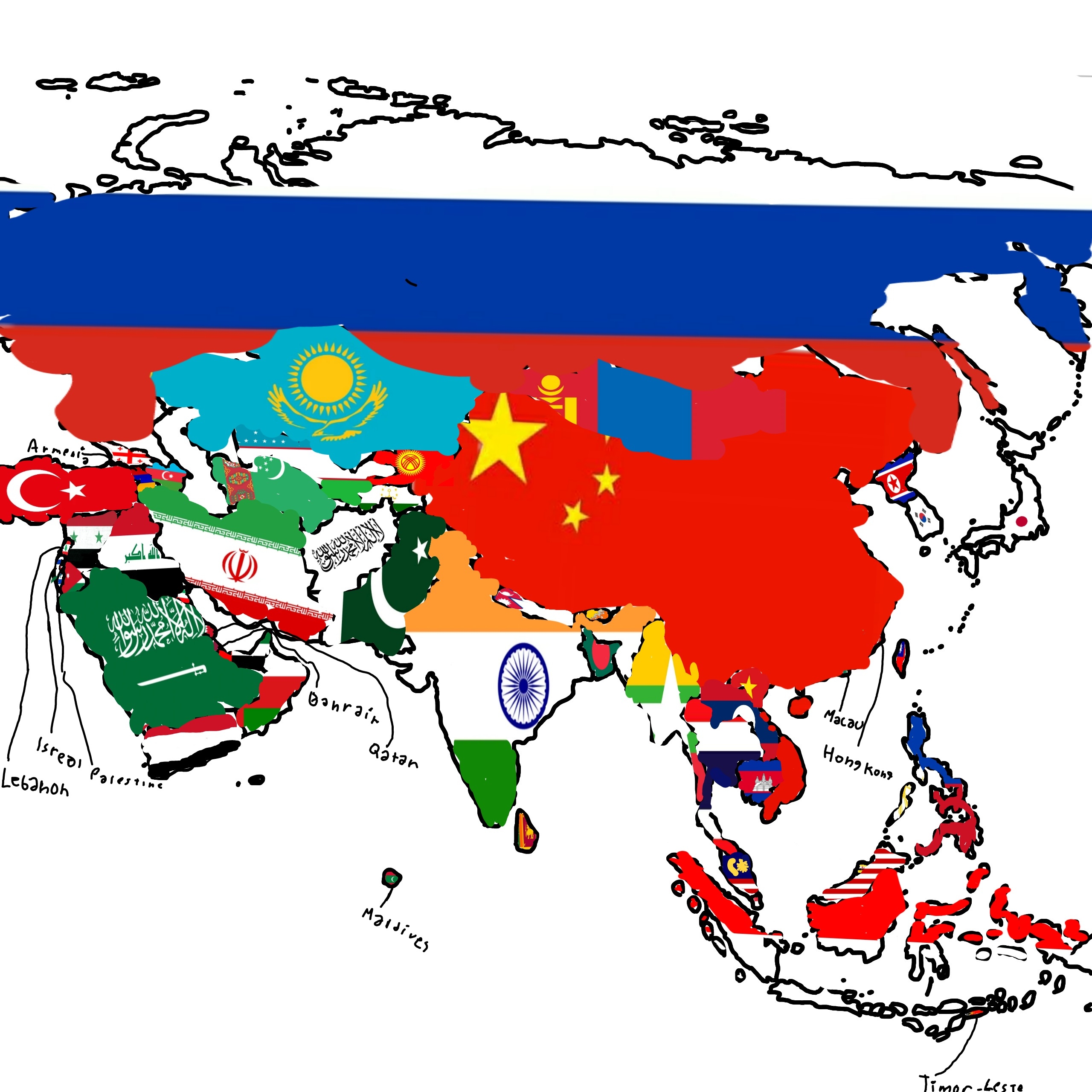
Asia is home to 49 sovereign nations, each with a distinctive legal system shaped by history, religion, colonization, and political ideologies.
The continent’s legal landscape is as diverse as its cultures, encompassing common law, civil law, religious law, customary law, and mixed systems. Below is a country-by-country snapshot of the legal frameworks in Asia, highlighting the foundational legal principles and judicial structures of each state.
Central Asia
Kazakhstan – A civil law system influenced by Russian law, with increasing reforms toward judicial independence and international integration.
Kyrgyzstan – Civil law system with post-Soviet legal structures. Efforts ongoing to reduce corruption and improve legal transparency.
Tajikistan – Civil law with Islamic influences. The judiciary is formally independent but often influenced by the executive branch.
Turkmenistan – Civil law with a highly centralized and authoritarian system. Judicial independence is limited.
Uzbekistan – Civil law system undergoing significant legal reforms aimed at economic liberalization and international investment protections.
East Asia
China – Civil law system with socialist characteristics. Courts are state-controlled, and the Communist Party influences legal outcomes.
Japan – Civil law based on German and French models. Highly developed judiciary with an emphasis on procedural fairness.
Mongolia – Civil law with democratic reforms since the 1990s. Judiciary is moderately independent.
North Korea – Civil law system based on socialist principles. Judiciary lacks independence and is subordinate to the ruling regime.
South Korea – Civil law system with strong rule of law and independent judiciary. Influenced by European models and American legal thought.
Taiwan – Civil law based on Japanese and German influences. Democratic and independent judiciary.
South Asia
Afghanistan – Mixed legal system combining civil, customary, and Islamic law. Legal system affected by political instability and Taliban rule.
Bangladesh – Common law system inherited from British rule. Judiciary is constitutionally independent but faces political pressures.
Bhutan – Legal system based on Buddhist philosophy and customary law, with recent codification efforts.
India – Common law system with a strong constitutional framework and active judiciary. Influenced by British colonial rule.
Maldives – Mixed system with strong Islamic law influence in personal matters. Judiciary independence is limited.
Nepal – Mixed legal system with civil and common law elements. Recent democratic reforms have increased judicial transparency.
Pakistan – Common law system with Sharia influence, especially in family and criminal law. Judiciary is increasingly assertive.
Sri Lanka – Mixed legal system including Roman-Dutch civil law, English common law, and customary law.
Southeast Asia
Brunei – Dual legal system with English common law and Islamic law courts. Sharia law applies to Muslims.
Cambodia – Civil law influenced by French legal traditions. Judiciary lacks independence.
Indonesia – Mixed legal system combining civil law, Islamic law, and customary law (Adat). Legal reforms are ongoing.
Laos – Civil law system modeled on the French system. Judiciary is subordinate to the ruling party.
Malaysia – Common law system with Islamic law jurisdiction in personal matters for Muslims. Dual legal structure.
Myanmar – Common law foundation, now heavily influenced by military rule. Judiciary lacks independence.
Philippines – Mixed system with civil law in commercial matters and common law in criminal and civil proceedings. U.S. influence is significant.
Singapore – Common law system with high global recognition for judicial efficiency and rule of law.
Thailand – Civil law with influences from common law. Judiciary is constitutionally independent but sometimes politically influenced.
Timor-Leste – Civil law system based on Portuguese legal traditions. Judiciary is developing amid democratic transition.
Vietnam – Socialist civil law system. Legal reforms are modernizing commercial law and dispute resolution mechanisms.
Western Asia (Middle East & Caucasus)
Armenia – Civil law system with elements from Soviet law. Judiciary is undergoing reform to strengthen independence.
Azerbaijan – Civil law influenced by Russian and Islamic law. Efforts to align with international legal standards.
Bahrain – Mixed system of Islamic and civil law. Secular and Sharia courts function in parallel.
Cyprus – Common law system (in the Republic of Cyprus); Turkish-controlled northern area operates under a separate legal regime.
Georgia – Civil law system with influences from Germany and France. Judiciary is increasingly professionalized.
Iran – Theocratic legal system based on Islamic law (Sharia). Judiciary is deeply integrated with religious authorities.
Iraq – Mixed legal system combining civil law and Islamic law. Legal structure affected by ongoing conflict and reform.
Israel – Mixed system incorporating common law, civil law, and Jewish religious law. Independent and active judiciary.
Jordan – Mixed legal system with civil law and Islamic courts. Judiciary is moderately independent.
Kuwait – Mixed legal system of Islamic and civil law. Judiciary operates under constitutional monarchy.
Lebanon – Civil law system with religious courts for personal status matters. Legal structure reflects confessional politics.
Oman – Mixed legal system of Islamic law and civil law. Judicial independence is limited.
Palestine – Mixed legal system, heavily influenced by Jordanian and Egyptian law. Legal authority is fragmented.
Qatar – Mixed legal system incorporating Islamic and civil law. Judiciary includes Sharia and secular courts.
Saudi Arabia – Legal system based entirely on Islamic law. No codified civil code; religious texts guide judicial rulings.
Syria – Civil law system influenced by French law. Judiciary controlled by the ruling regime.
Turkey – Civil law system modeled on European law. Independent judiciary with recent political pressures.
United Arab Emirates – Dual system of civil and Islamic law. Common law courts operate in financial free zones.
Yemen – Mixed legal system with strong Islamic law influence. Judiciary is fragmented due to ongoing conflict.
Conclusion
Asia’s legal systems reflect the region’s vast historical, religious, and political diversity. Whether navigating contract law in Singapore, dispute resolution in India, or corporate governance in Japan, understanding the foundational legal frameworks of each country is essential. As globalization continues to influence legal harmonization, Asia’s diverse legal traditions offer both challenges and opportunities for legal professionals worldwide.
Subscribe for Full Access.


