
Defamation Lawsuit | Legal Affairs & Media Law | Politics
Abstract: Trump v. New York Times
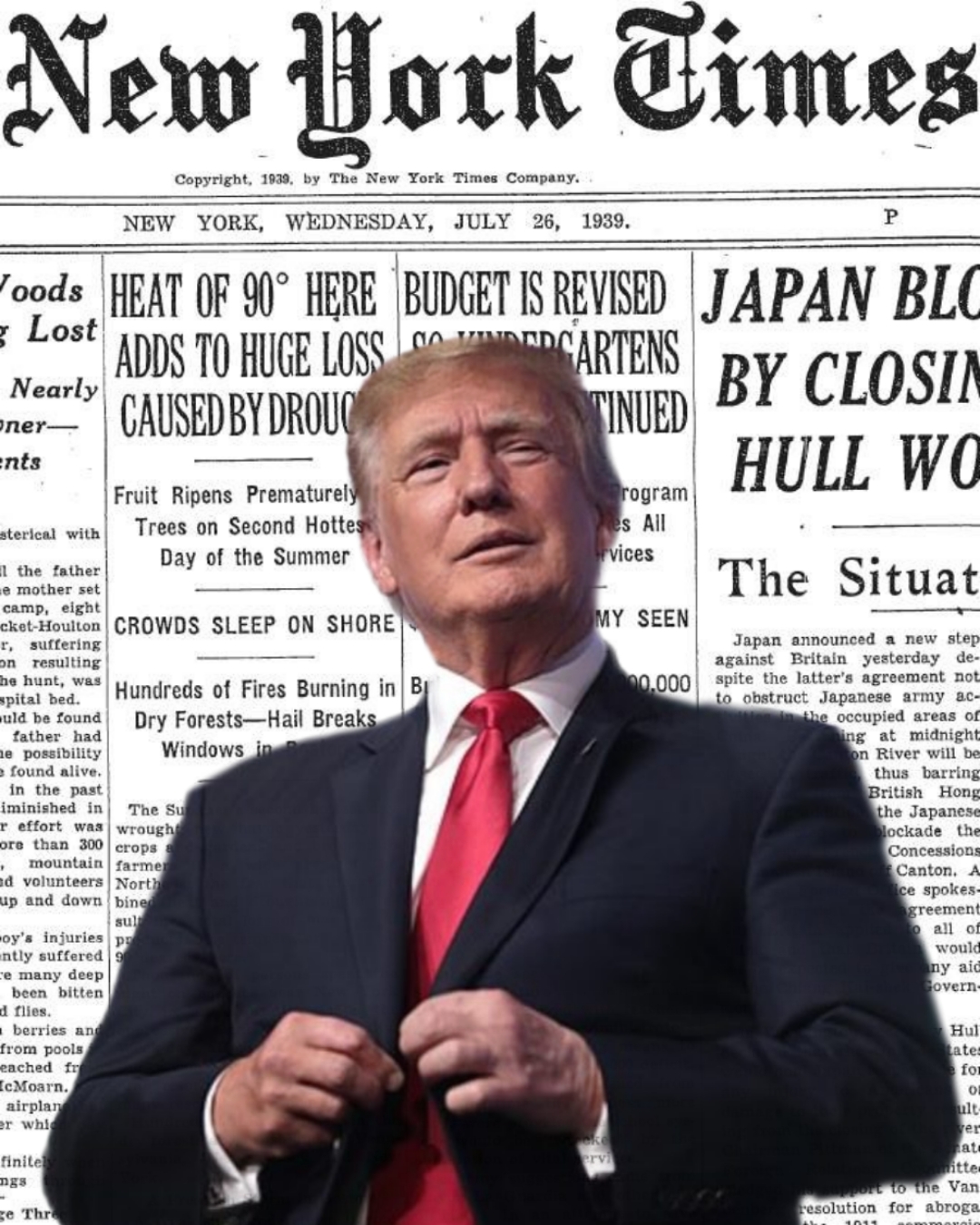
In a high-profile legal offensive, former U.S. President Donald J. Trump filed a $15 billion defamation lawsuit in federal court against The New York Times, four of its journalists, and book publisher Penguin Random House. The complaint alleges that false and defamatory statements were published with actual malice in the lead-up to the 2024 presidential election, including in articles and a book portraying Trump as having squandered his inherited wealth and fabricated his business success. The suit reopens critical constitutional questions at the intersection of media freedom, defamation law, and the accountability of public figures.
Case Overview
- Case Title: Trump v. The New York Times Company et al.
- Court: United States District Court, Middle District of Florida
- Filed: September 15, 2025
- Relief Sought: $15 billion in compensatory and punitive damages
- Causes of Action: Defamation, libel per se, injurious falsehood
- Defendants:
- The New York Times Company
- Four named Times journalists
- Penguin Random House (publisher of the book Lucky Loser)
Factual Allegations
The plaintiff alleges that the defendants collectively engaged in a pattern of defamatory reporting that included knowingly false claims about Trump’s business record, inheritance, and personal character. The complaint focuses heavily on:
- The 2024 book Lucky Loser: How Donald Trump Squandered His Father’s Fortune and Created the Illusion of Success.
- Accompanying New York Times articles and columns that allegedly rehashed the book’s claims without independent verification.
- Statements suggesting that Trump was never truly wealthy, that The Apprentice created a false perception of success, and that his financial empire is largely fictitious.
The lawsuit asserts that these publications were timed and structured to influence public opinion before the 2024 presidential election, thereby exacerbating reputational damage and financial harm to Trump’s businesses and media ventures.
Legal Claims and Standards
As a public figure and political candidate, Trump must satisfy the “actual malice” standard established in New York Times Co. v. Sullivan, 376 U.S. 254 (1964). To prevail, he must demonstrate by clear and convincing evidence that the defendants published the allegedly defamatory statements with knowledge of their falsity or with reckless disregard for the truth.
The complaint contends that the defendants:
- Knowingly ignored contradictory public records, tax filings, and business valuations;
- Suppressed credible counter-narratives or omitted exculpatory facts;
- Proceeded with publication despite internal reservations expressed by editorial staff (allegedly evidenced by pre-publication emails cited in the filing).
Notably, the $15 billion claim includes reputational harm, alleged business losses, and diminished stock valuation of Trump-affiliated companies, including Trump Media & Technology Group.
Key Legal Issues
1. First Amendment Protections
The defense will likely rely heavily on constitutional safeguards, arguing that the publications constitute opinion, fair comment, or newsworthy reporting entitled to heightened protection. Courts have long held that rhetorical hyperbole, satire, and interpretive judgments about public figures are not actionable under defamation law (Milkovich v. Lorain Journal Co., 497 U.S. 1 (1990)).
2. Opinion vs. Fact
The court must determine whether the disputed statements are provably false factual assertions or protected opinion. Assertions about Trump’s business performance, net worth, and legacy may fall into ambiguous territory where factual assertion blurs with evaluative judgment.
3. Damages and Causation
Trump must establish that the allegedly defamatory statements caused measurable harm. This includes proving a causal link between the publications and any drop in valuation, lost business opportunities, or political damage. The $15 billion figure, while headline-grabbing, may face scrutiny for lack of specificity.
4. Prior Litigation History
Trump’s history of litigation against media outlets may be raised by defendants to argue that this lawsuit constitutes an abuse of process or is part of a broader pattern of attempting to chill unfavorable coverage.
5. Jurisdiction and Venue
Filed in the Middle District of Florida, the lawsuit’s venue could face early procedural challenges. The Times and Penguin Random House are headquartered elsewhere, and questions may arise as to whether Florida courts represent a proper or convenient forum under federal civil procedure rules.
Potential Defenses
- Truth or Substantial Truth: If the statements are factually accurate or substantially so, defamation claims fail.
- Actual Malice Standard Not Met: Defendants may assert that all reporting was based on good-faith investigation, public documents, or protected editorial judgment.
- Opinion Doctrine: Courts may find that much of the material constitutes non-actionable opinion.
- Statute of Limitations: Any time-barred claims (depending on when statements were published) could be dismissed at the pleading stage.
Industry and Constitutional Implications
This case arrives amid increasing litigation by public figures against news outlets, testing the resilience of Sullivan-era protections. Some legal scholars have speculated that the current U.S. Supreme Court may be open to revisiting or narrowing Sullivan’s scope. Justices Thomas and Gorsuch, in prior writings, have suggested that the actual malice standard may be overbroad.
A ruling in Trump’s favor could significantly alter the legal landscape for political journalism—potentially lowering the bar for public figures to sue, or shifting how publishers assess risk around investigatory profiles and political commentary.
Conclusion: Press Litigation Era
Trump v. The New York Times is not merely a personal defamation dispute—it is a potential landmark test of First Amendment doctrine, defamation law, and the media’s role in American democracy. As the case progresses through preliminary motions, discovery, and possible trial, it could reset the boundaries of liability for speech concerning the most powerful figures in society.
While many observers expect the court to dismiss at least some of the claims on procedural or constitutional grounds, the sheer scale and symbolic force of the lawsuit ensure it will remain at the forefront of legal, media, and political debate well into 2026.
Subscribe for Full Access.


