
IP Law | Business Litigation | Technology
Introduction: AI, Copyright, and the Expanding Legal Frontier
In a high-stakes development at the intersection of copyright law and artificial intelligence, Warner Bros. Discovery (WBD) has filed a sweeping federal lawsuit against Midjourney, one of the leading generative AI platforms, accusing it of large-scale, willful infringement of WBD’s most valuable intellectual property.
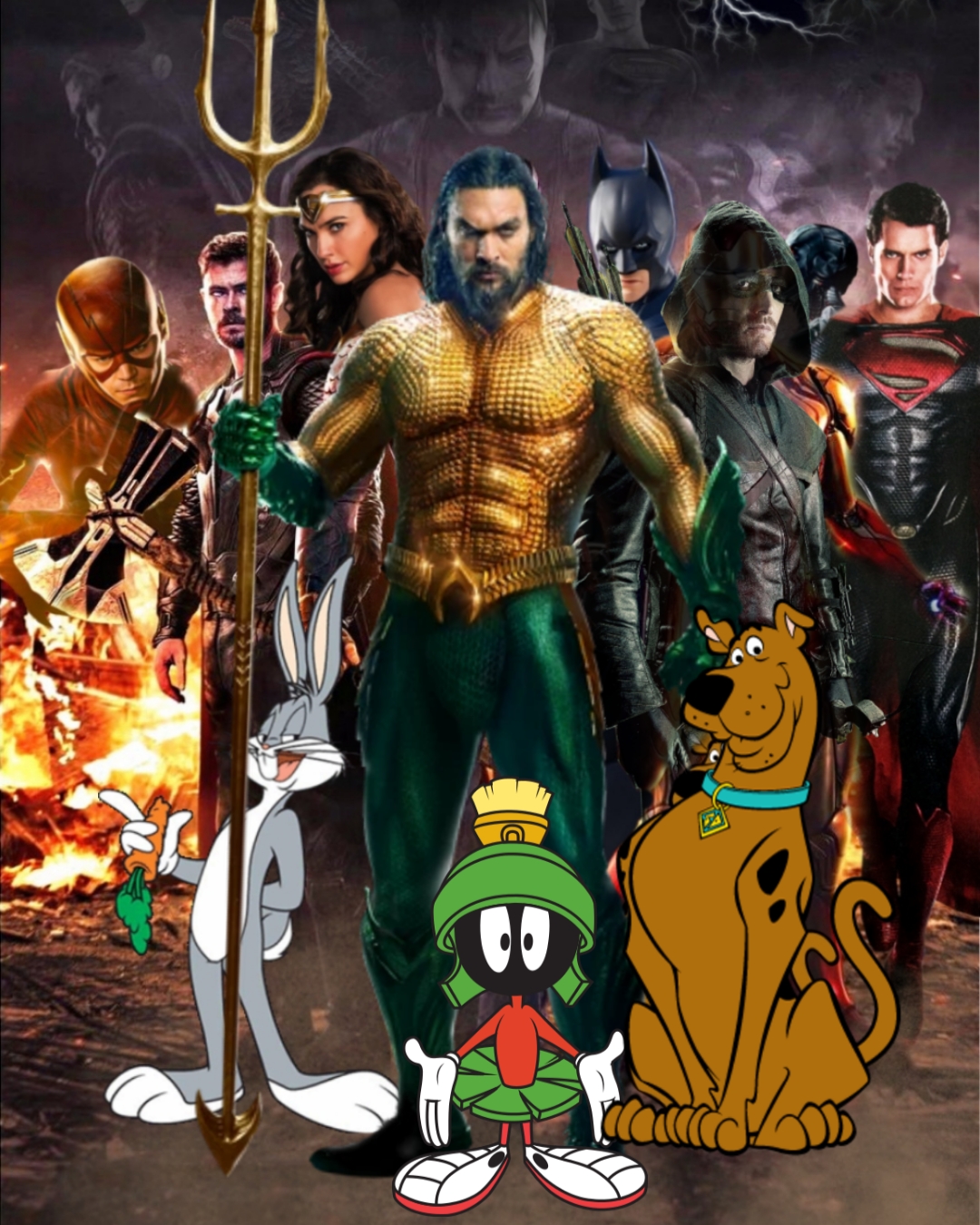
The complaint, filed in the U.S. District Court for the Central District of California, alleges that Midjourney used copyrighted characters—including Superman, Batman, Bugs Bunny, Scooby-Doo, and others—to train its AI systems and to generate unauthorized derivative works at massive scale. The suit seeks statutory damages of up to $150,000 per infringed work, along with injunctive relief and disgorgement of profits.
Allegations of Mass Infringement and AI Exploitation
According to the 92-page complaint, Midjourney is alleged to have “built its business on the back of copyright theft,” by allowing users to generate photorealistic or stylized images and videos featuring some of WBD’s most iconic characters—often in unlicensed and inappropriate contexts.
The lawsuit asserts that Midjourney trained its model on thousands of copyrighted images, bypassing licensing requirements, and continues to allow users to prompt the system in ways that replicate distinctive visual elements protected under copyright law. Even abstract prompts like “classic superhero battle” or “animated dog detective in mystery setting” reliably generate content clearly referencing WBD properties, the complaint claims.
“Midjourney dispenses our intellectual property as if it were its own,” said a WBD spokesperson in a press statement. “This isn’t fair use—it’s commercial theft disguised as innovation.”
Seeking Statutory and Equitable Remedies
WBD is seeking maximum statutory damages under the U.S. Copyright Act—up to $150,000 per work found to be willfully infringed. Given the scale of alleged violations, the potential financial exposure is staggering. Internal estimates suggest that if just 2,000 infringed images were proven, total damages could exceed $300 million—roughly Midjourney’s projected 2024 revenue.
In addition to monetary relief, WBD is asking the court for:
- A permanent injunction against further reproduction or dissemination of infringing content;
- Destruction of infringing material already created;
- A court-ordered halt to Midjourney’s training and distribution involving WBD content;
- Full accounting and disgorgement of profits attributable to infringement.
Midjourney’s Expected Defense: “Fair Use” and the Open Web
Though Midjourney has not yet formally responded to the lawsuit, the company is expected to raise a transformative fair use defense, arguing that the use of copyrighted materials in AI training is both legally permissible and technologically essential.
Midjourney has previously argued in other litigation—including a joint suit filed by Disney and Universal in June—that its platform functions like a search engine or tool, not as a publisher of infringing works. Its Terms of Service prohibit users from generating infringing material, the company says, and any misuse should be attributed to individuals, not the tool itself.
Legal observers remain divided. Some copyright scholars argue that training AI on copyrighted data may qualify as fair use under Google Books and Authors Guild precedents, while others believe generative AI creates fixed, derivative works, clearly violating copyright protections.
Legal Significance and Industry Ramifications
This case is likely to test—and potentially redefine—the boundaries of copyright law in the generative AI context. Unlike prior lawsuits involving text or code, WBD’s complaint centers on visually distinctive characters and styles, many of which have enjoyed decades of brand protection and are embedded in global entertainment.
“This lawsuit could become the AI equivalent of Napster v. Music Industry,” said IP attorney Carla Marquez of Greenberg Nichols LLP. “It’s about whether iconic content—images that carry commercial and emotional weight—can be harvested by machines without compensation.”
A victory for WBD could trigger:
- A wave of licensing deals between studios and AI developers;
- The requirement for filtering tools or style-blockers in AI platforms;
- New case law clarifying whether AI outputs qualify as infringing derivative works.
On the other hand, a win for Midjourney could solidify fair use as a shield for AI training, paving the way for broader, unlicensed content harvesting across media sectors.
Conclusion: A Growing War Between AI and Content Owners
The WBD suit follows similar complaints filed by Disney, Universal Pictures, and other studios earlier this year. The Motion Picture Association has formally backed WBD’s legal position, stating that unregulated AI use of copyrighted media threatens the “economic and creative foundations of the entertainment industry.”
Meanwhile, creators across industries are watching closely. Artists, writers, and musicians have all raised alarms over AI models trained on their work without permission. With Congress debating a possible federal AI copyright reform bill, this case could shape both judicial and legislative outcomes.
What’s Next?
The case, Warner Bros. Discovery v. Midjourney Inc., has been assigned to Judge Dolores Hartman, a jurist with prior rulings on digital rights and IP enforcement. A motion to dismiss is expected by late October, with preliminary hearings likely to begin in Q1 2026.
Until then, the AI industry remains on uncertain legal ground—caught between technological momentum and increasingly aggressive IP enforcement.
Case Citation:
Warner Bros. Discovery, Inc. v. Midjourney Inc., Case No. 2:25-cv-07319 (C.D. Cal. filed Sept. 4, 2025)
Subscribe for Full Access.


