
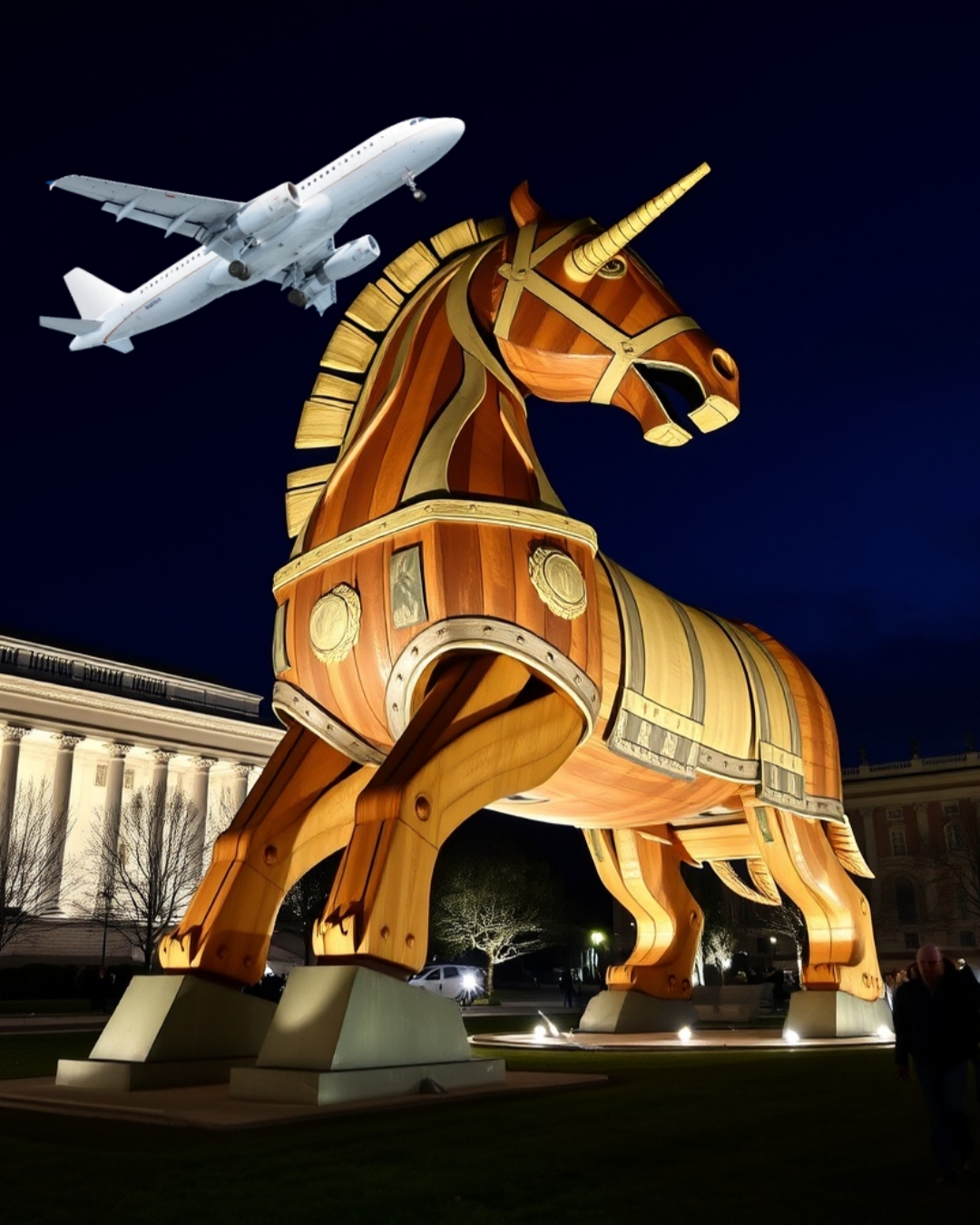
In 2025, the Trump administration faced scrutiny over reports that it was set to receive a luxury Boeing 747-8 aircraft from the Qatari royal family.
Valued at around $400 million, the jet was intended to serve as a temporary Air Force One and would reportedly be donated to Trump’s presidential library after his term. Legal experts raised concerns regarding potential violations of the U.S. Constitution’s Foreign Emoluments Clause, which prohibits officials from accepting gifts from foreign entities without congressional approval. Critics argued that the gift was unprecedented and potentially violated federal statutes, including emoluments and anti-bribery laws .
The Trojan Horse Analogy
The story of the Trojan Horse from Greek mythology tells of the Greeks presenting the Trojans with a massive wooden horse as a gift, concealing soldiers within. Once accepted, the hidden soldiers emerged, leading to the fall of Troy. Similarly, Qatar’s gift, while outwardly generous, may harbor hidden implications that could undermine U.S. sovereignty and ethical governance.
Legal Concerns: The Foreign Emoluments Clause
The U.S. Constitution’s Foreign Emoluments Clause prohibits federal officials from accepting gifts, emoluments, offices, or titles from foreign states without the consent of Congress. This provision aims to prevent foreign influence over U.S. officials and to maintain the integrity of American governance.
Legal experts raised alarms that accepting such a substantial gift without congressional approval could constitute a violation of this clause. Former White House ethics lawyer Richard Painter and law professor Jessica Levinson argued that the gift was unprecedented and potentially breached federal statutes, including anti-bribery laws. Critics contended that the arrangement could be perceived as a form of foreign bribery and may compromise national security .
Ethical Implications and Public Perception
Beyond legal considerations, the ethical implications of accepting such a lavish gift are profound. The perception of foreign influence over U.S. officials can erode public trust in government institutions. The optics of a foreign government providing a $400 million aircraft to a sitting or former president may suggest a quid pro quo arrangement, even if none exists.
Furthermore, the plan to transfer the aircraft to Trump’s presidential library raises questions about the appropriate use of public funds and resources. While the White House asserts that the gift complies with all legal requirements, the controversy underscores the need for transparency and accountability in dealings with foreign entities.
Conclusion
The Trojan Horse serves as a timeless cautionary tale about the potential dangers of accepting gifts that may carry hidden agendas. Qatar’s offer, while seemingly generous, warrants thorough legal scrutiny to ensure compliance with constitutional provisions and to uphold the ethical standards of American governance. As this situation unfolds, it serves as a reminder of the importance of vigilance in preserving the integrity of public office and safeguarding against undue foreign influence.
Subscribe for Full Access.


