
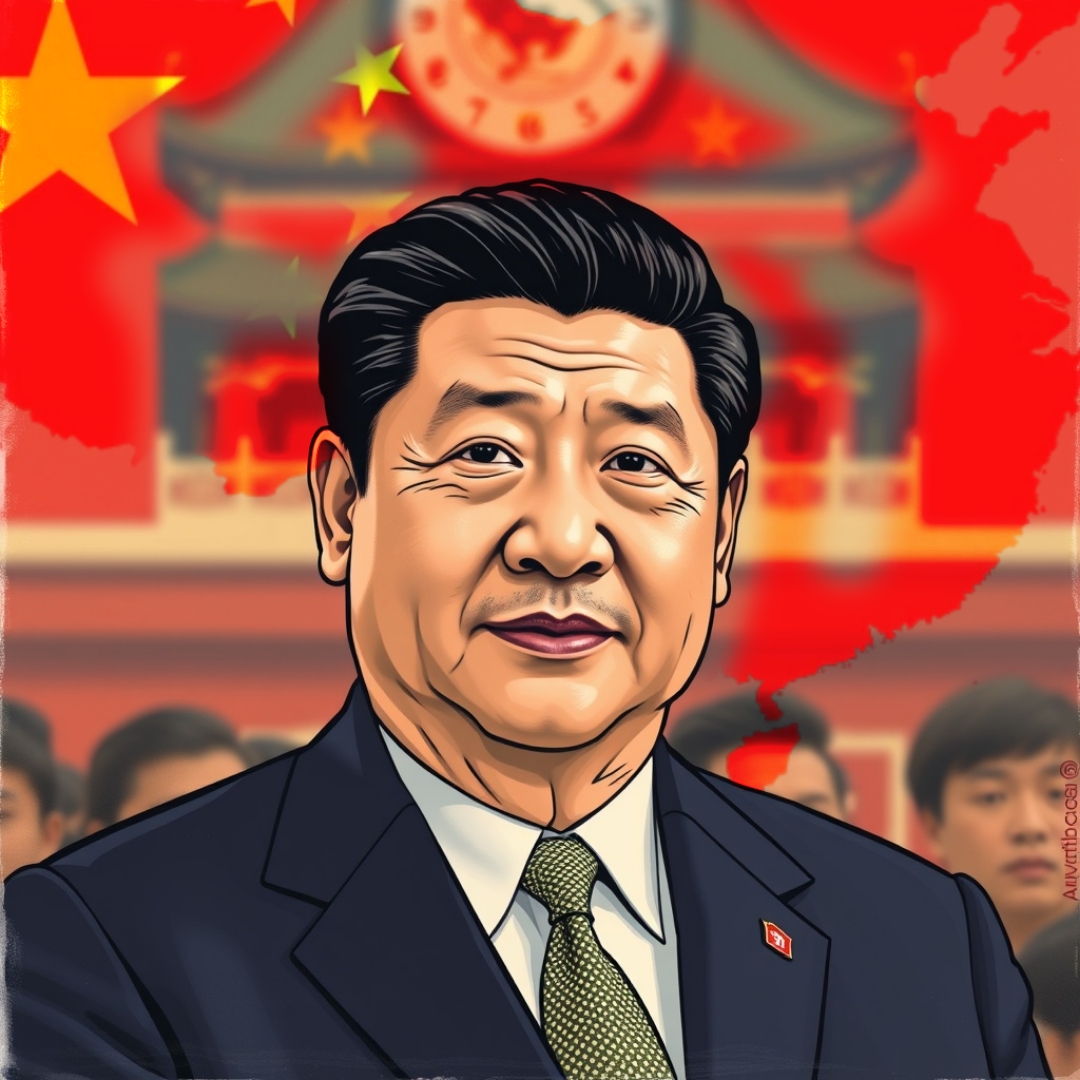
Since taking office in 2012, Xi Jinping has transformed the political and legal fabric of China in ways not seen since the era of Mao Zedong.
His consolidation of power has not only reshaped China’s domestic governance but has also raised significant questions about constitutionalism, rule of law, and the future of legal norms in one of the world’s most powerful nations.
A Strategic Ascension
Xi Jinping was appointed General Secretary of the Communist Party of China (CPC) in 2012 and subsequently became President of the People’s Republic of China in 2013. From the onset, his administration was marked by an aggressive anti-corruption campaign, which served both as a political tool and a mechanism for centralizing power. Under the banner of reform and discipline, numerous senior officials, including political rivals, were investigated and removed.
Constitutional Amendments: The Pivotal Legal Shift
The most consequential legal development came in March 2018, when the National People’s Congress (NPC), China’s top legislative body, approved a constitutional amendment abolishing the two-term limit for the presidency. This amendment effectively cleared the path for Xi to remain in office indefinitely.
While the term limit had been introduced in the 1982 Constitution as a safeguard against authoritarian rule following the chaos of Mao’s era, its removal marked a significant departure from the collective leadership model that had prevailed post-1978. The vote to abolish the term limit passed with 2,958 votes in favor, two opposed, and three abstentions—revealing the extent of Xi’s grip on the legislative body.
Legal Mechanisms vs. Rule of Law
From a legal industry perspective, the constitutional amendment underscores a complex dichotomy: the use of legal mechanisms to consolidate political power, often at the expense of institutional checks and balances. The process was formally legal—conducted by the NPC with overwhelming majority approval—but many scholars argue it undermines the principles of constitutionalism and separation of powers.
China operates under a system of “rule by law” rather than “rule of law.” In this framework, law is seen as a tool for governance by the ruling party rather than an independent framework for accountability. Thus, while Xi’s continued presidency is legally sanctioned, it raises significant concerns about the independence of the legal system and the role of constitutional constraints in authoritarian regimes.
Broader Implications
Xi Jinping’s indefinite hold on power has profound implications for China’s domestic and international posture. Internally, it reduces predictability and transparency in leadership transitions, which may affect governance stability in the long term. Internationally, it signals a more assertive and enduring Chinese leadership model that contrasts sharply with liberal democratic norms.
Legal analysts and constitutional scholars continue to debate whether the codification of indefinite rule represents a regression in governance or an evolution tailored to China’s unique political context. Regardless of the interpretation, the precedent set by Xi’s legal reforms marks a defining moment in the intersection of law and authoritarian power.
Conclusion: A Strategic Masterclass in Legal Power Consolidation
Xi Jinping’s rise is not merely the story of a political leader extending his tenure—it is a strategic and calculated redrafting of China’s legal and constitutional architecture to secure enduring control. Through orchestrated legal reforms, institutional reshaping, and party-centric governance, Xi has created a model of leadership that minimizes dissent, concentrates authority, and blurs the line between party and state.
From a legal industry perspective, this is a textbook case of how law can be engineered not just to govern, but to entrench political dominance. Xi’s removal of presidential term limits was not an isolated maneuver; it was part of a broader legal and ideological campaign to establish a new governance paradigm—one where political continuity is framed as national stability.
Our prediction is clear: Xi Jinping will continue leveraging legal frameworks to reinforce his legacy and centralize control, not only through constitutional amendments but also by embedding party doctrine deeper into judicial, educational, and commercial institutions. The creation of parallel oversight bodies like the National Supervisory Commission—an anti-corruption agency beyond traditional legal constraints—signals a shift toward a hybrid model of governance where accountability is internalized within party lines rather than externalized through independent legal mechanisms.
As the global legal community watches these developments, the challenge remains: how can law preserve its integrity when it becomes indistinguishable from political will? The legal industry must not only interpret these shifts but also confront the uncomfortable reality of how legal systems can be repurposed—not to check power, but to perfect its perpetuation.
Subscribe for Full Access.


